An analysis of the skills IROs think are most critical to their team's success
This latest IR Magazine research report on IR skills unveils the expertise considered most critical and the key trends that are driving the need for new competencies. Survey results reveal a dual focus on the core skills of financial literacy and communications, as well as emerging disciplines such as data analysis, ESG and AI.
This report is based on responses to IR Magazine’s Global IR Survey. Data is taken from surveys conducted between Q1 2023 and Q1 2024.
Much of the data in this report is broken down by geographical region and company market capitalization. For the purposes of this report, the key regions examined are North America, Europe, Asia and rest of world.
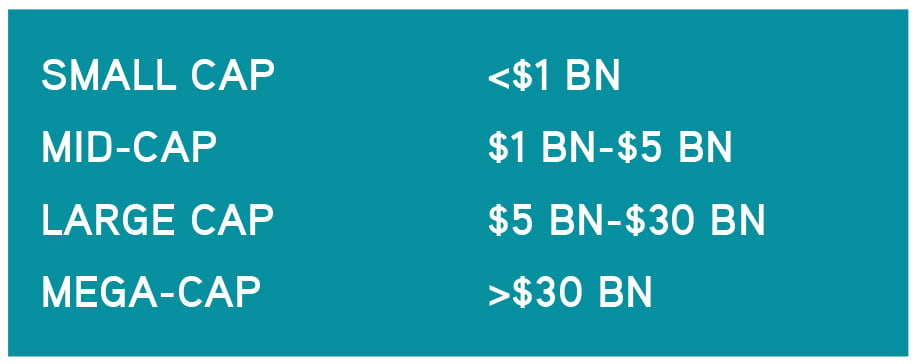
All monetary figures given in this report are in US dollars, with company market capitalizations classified as follows:
Globally, the majority of respondents (53 percent) are satisfied with their IR team’s skillset, with North America and Europe leading the way.
Financial literacy and communication skills rank as most important across the board. North American IROs prioritize financial literacy, Asian respondents emphasize data analysis and regulatory knowledge and European professionals prize communications skills.
Smaller firms may be inclined to prioritize financial literacy to establish a strong financial foundation, while larger companies tend to focus on strategic communication to manage market perceptions and investor trust.
Sectors such as energy, industrials and materials emphasize financial literacy, perhaps due to their capital-intensive nature. Sectors including communications, healthcare and financials prioritize strong communication skills.
AI and machine learning, sustainability reporting and sustainable finance knowledge are identified as the top three areas where IR teams need to enhance their capabilities.
Soft skills, such as effective communication and relationship building, are recognized as being just as important as technical skills.
Globally, the majority of respondents (53 percent) are satisfied with their IR team’s skillset.
North America reports the highest percentage of very satisfied respondents (39 percent), while Asia reports the highest percentage of satisfied respondents (62 percent).
North American and European respondents report the highest satisfaction levels with their team’s current skillsets, based on a combination of ‘very satisfied’ and ‘satisfied’ scores. Europe has the second-highest satisfaction level (at 85 percent) after North America, but it is interesting to note that this ties with the ‘Rest of world’ respondents, percentage-wise. Respondents from the rest of the world are, however, more likely to be very dissatisfied with their skillset than are those in Europe.
Globally, only a small proportion of respondents (2 percent) express any dissatisfaction with their team's skillset.
In general, large-cap, mid-cap and mega-cap firms report higher satisfaction levels than small-cap companies. At least two thirds of companies across all cap sizes are at least satisfied with their team’s skillset. Mega-caps particularly stand out, with a combined satisfaction rate of 97 percent (61 percent satisfied, 36 percent very satisfied).
Mid-cap firms have the highest proportion of satisfied respondents, at 71 percent, while large-cap firms have the highest percentage of very satisfied respondents (46 percent).
Respondents from the communications, financials and technology sectors report the highest satisfaction levels, while those in materials (11 percent) and real estate (6 percent) show significant dissatisfaction.
No respondent from the consumer staples or utilities sector is in any way dissatisfied, with more than a third of consumer staples respondents very satisfied and the rest at least satisfied. Respondents from the utilities sector are even happier, with three quarters saying they are very satisfied. More than four in 10 respondents (44 percent) from the financials and technology sectors are very satisfied.
Which skills will be critical for an IRO in the next three years? Average ratings from one (most critical) to three
When respondents were asked to rank the top three skills critical for an IRO in the next three years, financial literacy and communications prowess rank as most important across North America and Europe. North America places a slight premium on financial literacy, reflecting the necessity for precise financial reporting, while Europe leans slightly more toward communication skills. Asia places greatest emphasis on data analysis and regulatory knowledge, possibly because compliance can be very region-specific.
Although data analysis competence ranks as the joint-third most critical skill of those that respondents were asked to rank in terms of importance, it remains significant due to the growing importance of big data and the need for precise, data-driven decision-making.
Regulatory knowledge is also recognized as essential for navigating complex global financial regulations to ensure compliance and mitigate risks.
Other skills such as competence in ESG and AI also feature, albeit with relatively lower emphasis, highlighting their emerging relevance in the evolving landscape of IR.
When viewed according to company size, priorities for IROs vary. Financial literacy and communications skills remain universally important, but with slight differences: smaller companies prioritize financial literacy to build a solid financial foundation, while larger companies focus more on strategic communication to maintain investor trust and manage market perceptions.
The emphasis on financial literacy by small and mid-cap respondents suggests smaller firms are focusing on transparency and trust-building to attract and retain investors. This aligns with their need to prove financial stability and growth potential.
The higher emphasis placed on communication skills by large and mega-cap respondents indicates a need to effectively manage a broader and more diverse investor base, and to navigate public scrutiny and media relations. This reflects larger companies’ established financial practices and the importance of strategic communication in sustaining investor relations.
Financial literacy is particularly emphasized in capital-intensive industries such as energy, industrials and materials, as well as in sectors focused on financial stability like consumer staples and real estate.
Communication skills are equally important, especially in sectors that require effective stakeholder engagement and transparent communication regarding very complex issues.
For example, the communications, healthcare and financials sectors prioritize these skills in order to manage public perception and articulate intricate information clearly. In the technology sector, financial literacy and communication skills are deemed equally important, highlighting the need to convey complex financial metrics and technical advancements effectively.
Sector-specific emphasis on certain skills also highlights some unique industry needs. The communications sector values communication skills for managing public perception, while the consumer discretionary and consumer staples sectors require a balance between communication skills and financial literacy for brand management and financial stability.
The financials sector, interestingly, places a slightly higher emphasis on communication skills to maintain transparency and trust. Healthcare IROs require strong communication skills to articulate complex medical information, while those in the materials sector prioritize financial literacy to manage investments and market fluctuations.
In real estate, communications skills and financial literacy are equally crucial for marketing properties and demonstrating financial performance. The utilities sector also balances these skills to manage infrastructure investments and regulatory compliance.
These findings have significant implications for IR professionals. Both financial literacy and communication skills are clearly indispensable. Sectors with complex regulatory environments, such as financials, healthcare and utilities, and those with significant capital investments, like energy and industrials, require these specific skillsets to meet investor expectations.
Additionally, sectors that directly interact with consumers, such as consumer discretionary and consumer staples, need a balanced skillset to ensure effective communication and financial transparency.
Identifying and addressing critical skills gaps is essential for maintaining a competitive advantage and meeting shifting market demands. As indicated by their survey responses, IR teams face skills gaps in AI and machine learning. Sustainability reporting and sustainable finance knowledge are also seen as lacking, while digital communication and technology adoption remain essential across all regions, highlighting the need for tech-savviness.
Regional differences highlight specific needs, with Asia emphasizing skills gaps in sustainable finance and digital communication, while Europe and the rest of the world focus relatively more on sustainability reporting. Asian respondents are also more concerned about gaps in their teams’ cyber-security awareness, more so than any other region.
Globally and regionally, mature/essential skills in areas such as earnings calls, conflict resolution and team collaboration are seen to have less critical gaps, indicating either existing developed proficiencies or a lower perceived need for improvement.
For companies of all sizes, the lack of AI competence is particularly concerning, with most respondents citing this skill as lacking. Beyond that, the most critical gaps vary dramatically across the cap sizes: for small and mid-caps, the next-most worrying skills gap is in sustainability reporting, while large caps are more concerned about sustainable finance knowledge and mega-caps perceive the worst gaps to be in technology adoption.
Other significant areas with perceived skills gaps include sustainable finance knowledge for mid-cap firms. Conversely, skills linked to storytelling, earnings calls and presentations, team collaboration and conflict resolution are seen as lower priorities for development across all company sizes.
Businesses in different sectors have different priorities: while AI and machine learning remains the top concern for companies across the spectrum, the energy sector focuses just as heavily on sustainability reporting. For real estate firms, the second-most concerning skills gap is in social media, while companies in the communications sector perceive the next-biggest skills gap in investor relations to be cyber-security awareness.
Across sectors, there is a consistent emphasis on skills related to sustainability and technology, particularly for real estate and energy firms. Digital communication is seen as crucial by consumer staples firms, while consumer discretionary firms prize storytelling and strategic thinking. Utilities companies emphasize only AI and machine learning, sustainability reporting and mentoring and coaching, with zero concerns about any other skills gaps.
On a scale of one to five, where one means strongly disagree and five means strongly agree, to what extent do you agree with the following statements?
In this final section, we asked respondents to rank how little or how much they agree with various statements regarding the skills and competencies essential for IR roles. By examining the level of agreement, we are able to gauge the key issues and challenges faced by IROs and identify areas for targeted skills development.
The overall results reveal a global consensus on the importance of soft skills for IR professionals, with particular emphasis on effective communication and relationship-building across firms from all regions, market caps and business sectors.
There is moderate agreement on the necessity of digital communication proficiency, with respondents from Asia and the real estate sector valuing it more highly than respondents based in other parts of the world or working in other sectors.
Knowledge of regulatory compliance is deemed crucial, especially in Asia and at communications and real estate companies, while communicating a company's ESG strategy holds moderate importance across all regions, with greatest emphasis observed in Europe and Asia.
When viewed according to company size, there is general agreement across the board, with soft skills such as effective communication and relationship-building ranking highly across all market caps. Large and mega-cap respondents show the highest agreement, with an average ranking of 4.8. There is moderate agreement that IR professionals should be proficient in digital communication platforms for investor engagement across companies of all sizes.
Knowledge of regulatory compliance and reporting requirements is essential for IR professionals and there is strong agreement on this across all cap sizes, with small caps (4.5) agreeing slightly more strongly than firms of other sizes.
Effectively communicating the company's ESG strategy is seen as a core part of an IR role across the cap sizes, but agreement is more moderate, with large-cap respondents agreeing most strongly, giving an average agreement rating of four.
IR professionals across business sectors highly value soft skills like effective communication and relationship-building, giving average ratings of at least 4.5 out of five. As with different regions and market caps, knowledge of regulatory compliance and reporting requirements is considered essential among firms in all sectors, especially in the real estate and communications sectors. Communicating the company's ESG strategy is regarded as important, particularly in the consumer staples, energy and utilities sectors.
Proficiency in digital communication platforms for investor engagement is more moderately agreed upon, with those in the materials and real estate sectors rating it slightly more important – at 3.9 and 4.3, respectively – than respondents from other sectors.
Knowledge of regulatory compliance and reporting requirements is deemed essential by IR professionals across all sectors, most especially by respondents in the communications (4.7) and real estate (4.6) sectors.
Respondents exhibit less consensus about communicating the company's ESG strategy, with the lowest average agreement level seen in healthcare (3.3) and communications (3.5), and the highest agreement seen among consumer staples, energy and utilities firms (all 4.3).
This IR Magazine research report on IR skills highlights critical trends and areas for development. North America and Europe report the highest satisfaction levels with their IR teams’ skillsets, while Asia shows room for improvement through targeted skills development.
Mid-cap, large-cap and mega-cap companies are generally more satisfied than small-cap firms, and the utilities, communications, technology and financials sectors lead the way in positive feedback.
The report highlights the increasing importance of communication skills and financial literacy globally. ESG knowledge is gaining traction, reflecting a broader focus on sustainability. Regulatory knowledge remains crucial and the importance of organizational and planning skills is universally recognized.
Skills gaps identified in the report highlight the need for enhanced competencies in AI and machine learning, sustainability reporting and digital communication. Meanwhile, soft skills such as effective communication and relationship-building are deemed just as vital as technical skills.
Overall, the report illustrates a global consensus on the need for a balanced skillset in investor relations, combining both soft and technical competencies to meet evolving market demands and stakeholder expectations. Enhancing skills in the identified critical areas will be key for IR professionals to maintain a competitive edge and to effectively navigate the dynamic landscape of the investor relations function.
Projections and recommendations
To stay competitive and responsive to market dynamics, IR teams must engage in continuous skills development.
This development should address both regional and sector-specific needs, ensuring that IR professionals can meet evolving demands.
Survey insights highlight the need for customized skills development programs that cater to specific regions, company sizes and industry sectors.
Such tailored programs will help IR professionals effectively navigate the complexities of modern investor relations, particularly in areas of digital communication, regulatory knowledge and ESG strategy communication.
Strategic focus areas
Enhance communication skills.
Strengthen financial literacy.
Invest in training to develop greater competence in AI and data analysis.
Expand ESG knowledge, particularly in Asia.
Emphasize the importance of regulatory knowledge, especially for mega-cap firms.
Boost digital communication proficiency, especially at Asian companies and the consumer staples sector.
Maintain emphasis on organizational and planning abilities across all regions and company market cap sizes.
Adapt to technological changes by encouraging technological adoption and cyber-security awareness to keep pace with digital advancements.